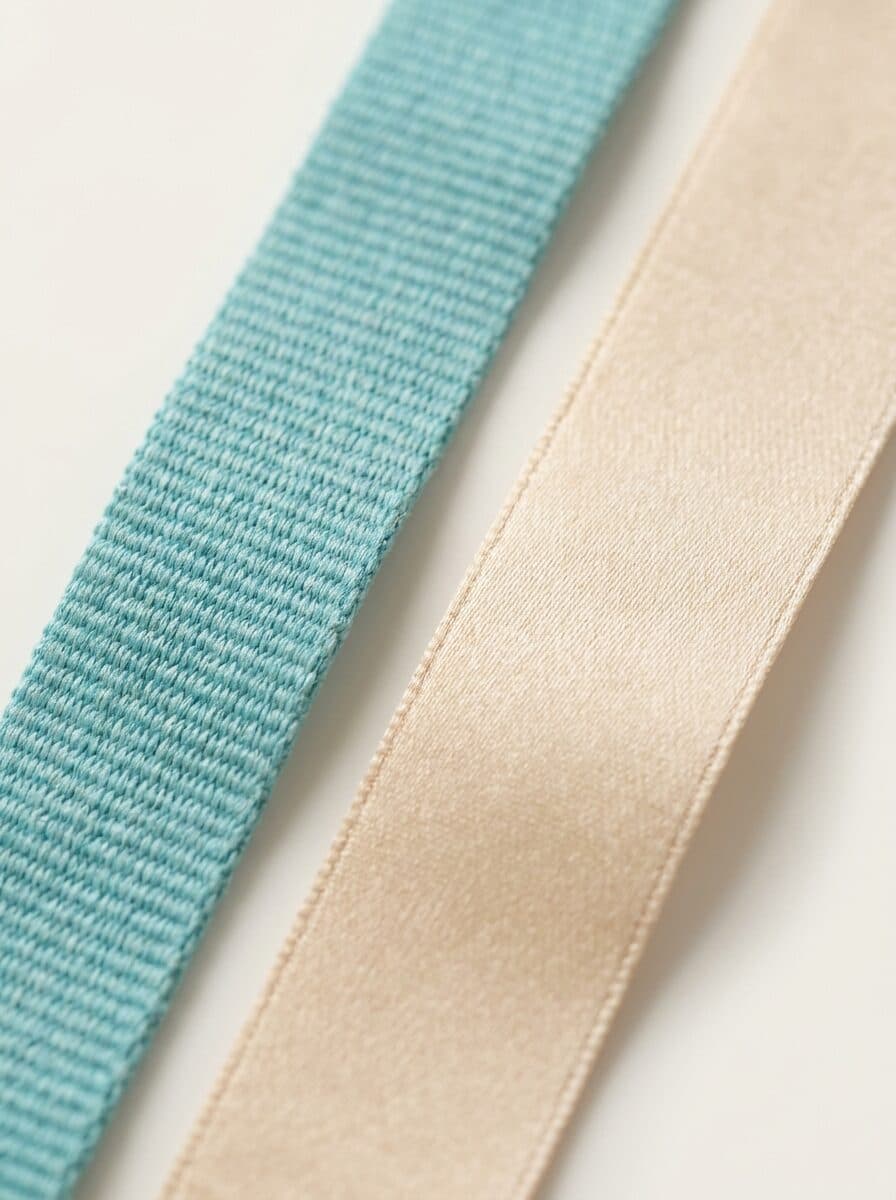
Why does material choice matter?
A lanyard is worn around the neck all day. The material affects skin comfort, durability, print sharpness, and whether it can be washed. The best material differs by use — events, companies, schools, or merchandise — so understanding the material before you order is the key to controlling both cost and satisfaction.
Choosing well the first time is, in the end, the economical choice. Buyers who start with the cheapest option often re-order once quality falls short, so a few minutes on material now can save a second production run later.
1st — Polyester: the value standard
Polyester is the most widely used lanyard material. It is inexpensive and durable, and it is optimised for dye-sublimation (full-fabric print), so even complex logos and gradients reproduce crisply.
Its drawback is lower breathability than natural fibres. Over long wear it does not wick sweat well, so for summer events or sports it is less suited than cotton. It is ideal where use is short — a day or two — as at company events, exhibitions, and event merchandise.
Price: lowest per unit among materials. Print sharpness: ★★★★★. Durability: ★★★★☆. Skin comfort: ★★☆☆☆.
2nd — Nylon: soft, and built to last
Nylon is softer and glossier than polyester, giving a premium feel. Colours read clearly with silk-screen or woven (jacquard) methods, and it fades little over long use.
It costs a little more than polyester but is often chosen for VIP events and for company ID straps where brand image matters. It resists water and holds its shape after washing, so it suits repeated use.
Price: a little above polyester. Print sharpness: ★★★★☆ (woven). Durability: ★★★★★. Skin comfort: ★★★☆☆.
3rd — Cotton: the best feel among natural fibres
Cotton is the most breathable and least irritating material, so it suits long wear. It is especially favoured for kindergarten and primary-school events, children’s merchandise, and eco-minded brands.
However, cotton cannot take dye-sublimation, so silk-screen spot-colour printing is the norm. If you want a full-colour, complex design, polyester is the better choice. Cotton may also shrink slightly after washing.
4th — Satin: for events and premium gifts
Satin is highly glossy and very soft, and is often used for award, recognition, and anniversary gift lanyards. It clearly looks premium, but durability is a little lower and the price is higher.
It suits single-day event use kept afterwards as a keepsake, rather than long daily wear. Printing is usually silk-screen or heat transfer.
5th — Eco (RPET, bamboo, organic cotton): sustainable branding
Fabric made from recycled PET bottles (rPET), bamboo fibre, and organic cotton suits ESG programmes and eco brands. The physical properties are similar to standard polyester or cotton, but a certificate of material origin (such as GRS) can be provided for use in corporate CSR reporting.
It costs more than the equivalent standard spec, but shows strong preference in ESG-related corporate events and public-sector collaborations. It is a frequently requested material from corporate CSR teams.
Which material should you choose? Recommendations by use
Company ID and access passes (daily use): nylon over polyester. Short events and conferences: polyester, for best value. Children or sensitive skin: cotton. Awards and keepsakes: satin. ESG and eco campaigns: RPET or organic cotton.
If you are unsure, tell us the purpose and how long it will be worn when you request a quote, and we will recommend the best material along with indicative pricing.
Q. Which lanyard material is the cheapest?
A. Polyester is the most affordable. It also suits full-colour dye-sublimation, so quality is high for the price.
Q. Which material should we use for ESG events or public-sector supply?
A. We recommend GRS-certified RPET. A certificate of recycled-material origin can be issued for use in CSR reporting.